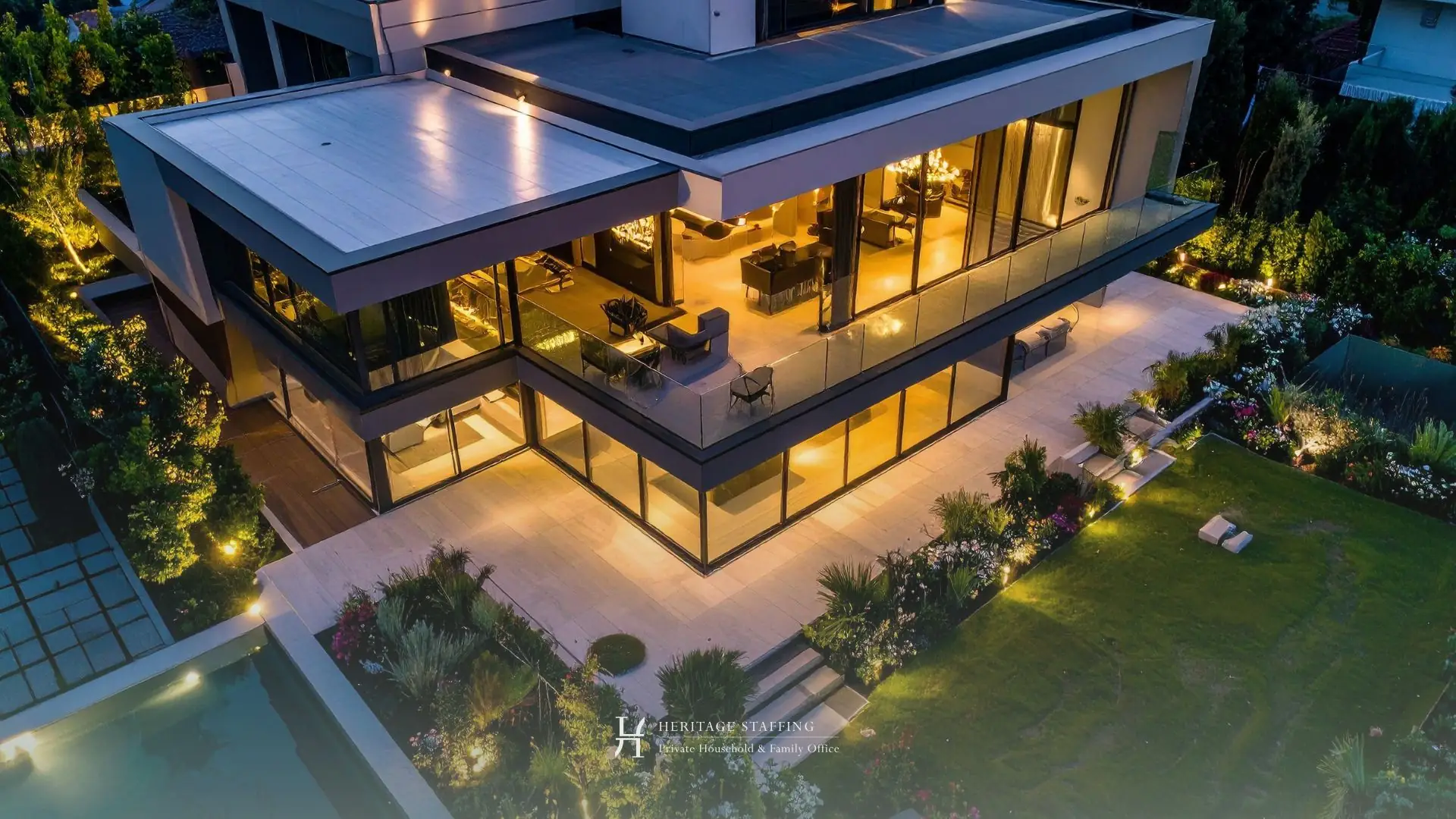

For UHNW principals, the allure of a summer residence lies in the promise of instant relaxation. Yet, opening seasonal homes often reveals a very different reality—arriving at a villa in the South of France or a Hamptons estate only to find the pool heating malfunctioning, the staff unprepared, or a distinct musty odour in the primary suite.
This friction is rarely a failure of architecture — it is usually a failure of operational staffing. A property that sits dormant for six months cannot simply be “switched on” like a lightbulb. It requires a staged, technical awakening managed by qualified professionals.
Key Insight: Asset degradation—from warped millwork to compromised HVAC systems—occurs primarily during the opening and closing phases. Based on internal placement data and operational feedback from Estate Managers, a significant majority of preventative maintenance costs are incurred due to “rushed openings” where staff miss critical early warning signs.
Table of Contents
The “Soft Opening” Protocol: A Checklist for Opening Seasonal Homes
Many principals expect their Household Staff to prepare a 10-bedroom estate in under a week. This “Sprint Approach” forces staff to prioritize aesthetics (making beds, stocking fridges) over systems integrity. A robust opening a holiday home checklist must prioritize function over form.
The Staged Approach
A professional opening requires a 4-to-6-week lead time, orchestrated by an experienced Estate Manager.
- Week 1-2 (Technical Phase): Engineers and technical staff reactivate life-support systems (water, power, HVAC). No principals or guests should be on-site.
- Week 3-4 (Deep Clean & Inventory): Housekeeping teams strip covers, clean fine art, and restock linens.
- Week 5 (Staff & Service Dry Run): The full service team arrives. Kitchens are tested, service flows are rehearsed.
- Week 6 (Principal Arrival): The residence is fully operational and prepared to receive the principals.
Heritage Staffing Expert Tip: “We advise clients to send their House Manager or Technical Lead to the property at least 14 days before the seasonal staff arrive. If the AC unit has failed during the winter, you want to know about it when the house is empty, not when you have 15 seasonal staff waiting in 30-degree heat with no cooling.”
Need expert support? Heritage Staffing places Technical Estate Managers capable of managing complex property openings across Europe and the Middle East.
The Hidden Risks of an Unoccupied Property
A closed property can deteriorate quickly without proper care and maintenance. Without a “Care & Maintenance” team or a robust opening strategy, specific assets are at high risk. Effective luxury property maintenance requires a proactive operational approach to prevent costly damage.
HVAC, Water & Legionella
Stagnant water systems are a breeding ground for Legionella bacteria. A simple “flush” is often insufficient. A qualified property manager will schedule a chlorination and thermal shock treatment before the showers are used. Furthermore, HVAC systems that have been off for months often harbour mould spores, which are then blasted into the air upon activation.
Fine Art and Soft Furnishings
Humidity control is the enemy of fine art. If the climate control fluctuates during the off-season (due to power outages or “economy” settings), canvases can warp and veneers can crack.
The Staffing Solution: Hiring a housekeeper with specialist knowledge in conservation cleaning ensures that upon opening, artifacts are inspected for micro-damage rather than just “dusted.”
The Exterior & Grounds: Commissioning the “Outdoor Living Room”
In summer residences, the exterior spaces often see more usage than the interior. Yet, landscaping and pool systems are frequently neglected until the final days before arrival.
The Pool Commissioning Timeline
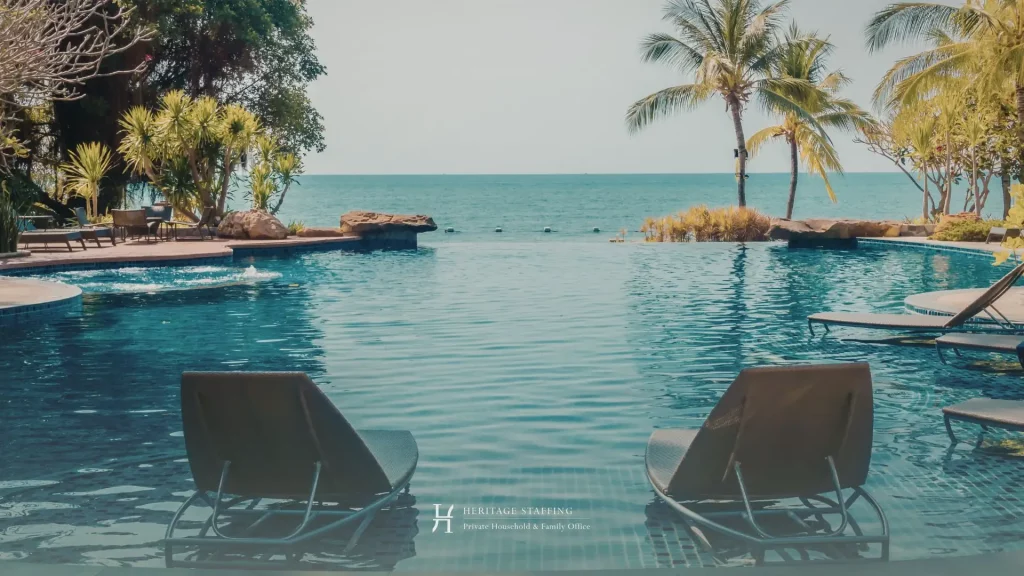
A swimming pool that has been winterized requires more than just a chemical shock.
- Chemistry Balance: It takes 5-7 days to stabilize pH and alkalinity levels to ensure the water is safe for sensitive skin. Rushed chemical treatments can lead to eye irritation and bleached swimwear.
- Heating Systems: Heat pumps and boilers must be tested under load. A common failure point is the heat exchanger, which may have corroded during dormancy.
- Safety Audits: Staff must check all pool alarms, covers, and suction release systems to ensure compliance with local safety laws (especially strict in France and Italy).
Landscape & Furniture Restoration
Teak furniture, outdoor cushions, and pergolas suffer from winter exposure. A dedicated “Exterior Team” should be deployed 3 weeks prior to arrival to:
- Pressure Wash & Seal: Stone terraces and pool decks need deep cleaning to remove slippery algae.
- Furniture Setup: Unpacking, cleaning, and arranging hundreds of cushions and sunbeds.
- Irrigation Check: Testing automated watering systems to ensure the manicured lawns survive the summer heatwave.

The “Lifestyle Layer”: Curating the Arrival Experience
Once the technical and physical assets are secured, the focus shifts to the “Lifestyle Layer.” This is where a Private PA or House Manager transforms a clean house into a functioning home.
The “Turnkey” Wardrobe
For UHNW families, arriving with luggage is optional. A professional opening includes:
- Wardrobe Refresh: Seasonal clothing stored on-site is unpacked, steamed, and hung. Winter garments are vacuum-sealed and stored.
- Personal Shopping: The House Manager coordinates with personal shoppers to stock the latest summer collections in the correct sizes before the Principal arrives.
- Toiletries & Amenities: Bathrooms are stocked with fresh, unexpired products. Sunscreens and skincare are replenished.
The Wine Cellar & Galley
A dormant kitchen is a liability.
- Appliance Calibration: Ovens and sub-zero fridges must be calibrated.
- Cellar Audit: A Sommelier or knowledgeable Butler should inventory the wine cellar, checking for cork taint or temperature fluctuations that occurred during winter.
- Provisioning: The Chef coordinates with local suppliers to ensure the kitchen is fully stocked with organic produce, specific dietary requirements, and favourite vintages upon arrival.
Security Reactivation: The Silent Shield
Security is often the most overlooked aspect of opening seasonal homes. A house that has been empty is a target.
The “Sweep” Protocol
Before the family arrives, the security team must conduct a physical and technical sweep.
- Perimeter Integrity: Checking fences, gates, and cameras for damage from winter storms or vandalism.
- Counter-Surveillance: For high-profile individuals, a TSCM (Technical Surveillance Counter-Measures) sweep ensures no listening devices were planted while the property was vacant or undergoing maintenance by external contractors.
- Access Control Reset: All codes and key cards used by winter contractors must be deactivated. New codes are issued to the summer staff.
Ensure your estate is secure. Heritage Staffing can deploy vetted Security & Close Protection teams to sweep and secure your property before arrival.
Staffing the Surge: The Seasonal Recruitment Crisis
The “Summer Scramble” is a well-known phenomenon when staffing seasonal residences. Principals often delay hiring seasonal staff until April, only to find that the top-tier chefs, butlers, and nannies have already been contracted by February.
The “Skeleton Crew” Myth
Relying on a skeleton crew to “open up” burns out your core team before the season even begins. Asking a PA to manage pool contractors or a Chef to supervise deep cleaning dilutes their effectiveness.
The Role of the Technical Estate Manager
For multi-property portfolios, a Technical Estate Manager is essential. Unlike a House Manager (who focuses on service and soft skills), a Technical Manager focuses on the “hardware” of the house. They speak the language of contractors, understand BMS (Building Management Systems), and manage the preventative maintenance schedule.
Staff Integration: Managing the “Culture Clash”
A summer residence often brings together a mix of permanent staff (travelling with the family) and temporary local staff. This dynamic is a breeding ground for conflict if not managed.
The “One Team” Policy
The Estate Manager must enforce a unified culture from Day 1.
- Induction: Temporary staff must undergo the same rigorous induction as permanent staff, covering confidentiality, etiquette, and specific family protocols.
- Accommodation Standards: Ensuring seasonal staff have high-quality accommodation prevents resentment. If the “travelling staff” stay in the main house and the “seasonal staff” are in a damp basement, friction is inevitable.
- Clear Hierarchy: Defining reporting lines is crucial. Does the seasonal housekeeper report to the Travelling Head Housekeeper or the local House Manager? Ambiguity leads to chaos.
The Ultimate Opening Checklist: Standard vs. Strategic
How does a standard agency opening differ from a strategic, asset-protection approach?
| Feature | Standard “Reactive” Opening | Heritage Staffing “Strategic” Opening |
|---|---|---|
| Timeline | 1-2 weeks before arrival. | 6-8 weeks before arrival. |
| Staffing | Core staff + local temps. | Core staff + vetted seasonal specialists. |
| HVAC/Water | Switched on and tested. | Lab-tested for Legionella; filters replaced; humidity logged. |
| Inventory | Checked for presence. | Checked for condition; breakage report filed; digital log updated. |
| Linens | Washed and made up. | Refreshed; mattresses sanitized; pillows replaced if aged. |
| Security | Alarm tested. | Full perimeter sweep; access codes reset; TSCM check. |
| Budget | Ad-hoc spending on repairs. | Pre-approved CAPEX budget for seasonal upgrades. |
| Outcome | “Looks ready.” | “Technically sound and legally compliant.” |
Managing the Logistics: Moving Staff Across Borders
Opening a summer residence often involves moving key staff from a winter base (e.g., Gstaad, London) to a summer base (e.g., Ibiza, Mykonos). This logistical hurdle is where compliance often breaks down.
- Visas & Permits: Seasonal staff in the EU often require specific work permits. Relying on tourist visas is a significant legal risk for UHNW employers. The “90/180 rule” in the Schengen zone is a common trap for UK-based staff.
- Accommodation: “Live-in” does not mean sleeping in a spare room. High-performing seasonal staff expect professional quarters. If the villa lacks staff accommodation, securing external rentals nearby is a non-negotiable cost of retention.
- Rotation: Implementing a 5-days-on, 2-days-off rotation for seasonal staff prevents burnout during the intense 8-week peak season.
Regional Nuances: Tailoring the Opening Strategy
The definition of “summer residence” varies wildly depending on geography. A staffing strategy that works in St. Tropez will fail in the Swiss Alps or the English countryside.
The Mediterranean Villa (St. Tropez, Ibiza, Mykonos)
- The Enemy: Salt, sand, and extreme heat.
- Staffing Focus: Exterior maintenance and “turnover” speed.
- Specific Challenge: The “party” schedule. Staff must be prepared for 4 AM finishes and 11 AM starts. This requires a double-shift system (Morning Team vs. Late Night Team) to ensure coverage without breaching labour laws.
- Technical Note: Salt air corrodes outdoor electronics rapidly. AV systems need rigorous testing and often component replacement every season.
The Alpine Chalet (Gstaad, Verbier – Summer Season)
- The Enemy: Meltwater and timber movement.
- Staffing Focus: Wood treatment and garden transition.
- Specific Challenge: Transitioning a “winter” house to summer. Heavy wool rugs and furs must be stored and replaced with lighter linens.
- Technical Note: Checking roof integrity after snow load is critical. A Technical Estate Manager will commission a drone survey to check for cracked tiles before the first summer storm.
The UK Country Estate (Cotswolds, Highlands)
- The Enemy: Damp and unpredictability.
- Staffing Focus: Heating systems and groundskeeping.
- Specific Challenge: The “mud room” management. Even in summer, UK estates require robust protocols for managing wet gear.
- Technical Note: Heating systems cannot be turned off completely. They must be serviced and set to a low ambient temperature to protect antiques from humidity spikes.
The Financial Argument: ROI of Professional Staffing
Principals often balk at the cost of a 6-week opening team. However, when viewed through an asset management lens, the ROI is clear.
Cost of Failure vs. Cost of Prevention
- Scenario: A seized AC compressor in July.
- Emergency Call-out: €5,000.
- Replacement Unit (Rush): €15,000.
- Hotel Relocation (3 nights for family + staff): €25,000.
- Total Reactive Cost: €45,000 + Stress.
- Scenario: Preventative Maintenance in April.
- Service Visit: €800.
- Part Replacement: €1,200.
- Total Proactive Cost: €2,000.
The Delta: A professional Technical Estate Manager saves the Principal €43,000 on a single incident, covering their salary for a significant portion of the season.
Seasonal properties require structured preparation long before arrival. A tailored staffing and maintenance plan can help protect your assets and ensure a seamless opening.
Plan Your Property OpeningCase Studies: The Tale of Two Openings
Case Study A: The “Reactive” Nightmare
- The Scenario: A Principal decides to visit their Ibiza villa in May, giving the local keyholder 5 days’ notice.
- The Staffing: A local cleaning crew was hired, and the family’s PA flew in 2 days prior.
- The Failure: Upon arrival, the air conditioning in the master suite failed (compressor seized during winter). The pool was cloudy due to incorrect chemical balance. The “local” chef hired last-minute did not understand the family’s strict dietary protocols.
- The Cost: The family moved to a hotel for 3 days (€15,000 cost) while emergency repairs were conducted at a 300% premium. The “relaxing” holiday began with stress and frustration.
Case Study B: The Heritage “Strategic” Opening
- The Scenario: A 6-week opening plan for a Côte d’Azur estate, led by a Heritage Technical Estate Manager.
- The Process:
- Week 1: Technical systems tested. A leak in the irrigation system was found and fixed.
- Week 3: Deep cleaning and textile restoration. Curtains were steam-cleaned in situ.
- Week 5: Full staff dry-run. The Chef prepared a sample menu; the service team practiced table settings.
- The Arrival: The family arrived to a perfectly cooled house, a stocked fridge, and a relaxed, cohesive staff team.
- The ROI: Zero downtime. Zero emergency repair bills. Total peace of mind.
Opening a summer residence is not a housekeeping task; it is an asset management operation.
Conclusion
The difference between a relaxing summer and a season of stressful repairs lies entirely in the staffing strategy deployed months in advance.
By treating the “opening” as a technical project led by qualified Estate Managers, you protect not only the physical asset but also the most valuable resource of all: the Principal’s time.
Plan your season. Contact Heritage Staffing to book Technical Estate Managers and Seasonal Teams for your summer residence opening.
Frequently Asked Questions (FAQ)
When should I start hiring staff for my summer residence?
Ideally, recruitment for high-level seasonal staff (Chefs, Estate Managers) should begin in January or February. By April, the top tier of candidates is typically fully booked. A lead time of 3-4 months ensures proper vetting and visa processing.
What is the difference between a House Manager and an Estate Manager?
A House Manager typically focuses on the “soft” operations: service, housekeeping, events, and family requirements. An Estate Manager takes a broader view, handling the “hard” assets: property maintenance, groundskeeping, contractors, security systems, and multi-property logistics.
How do I prevent mold in my villa when it is empty?
The key is consistent humidity control and air circulation. “Mothballing” a house completely (turning everything off) is dangerous. We recommend employing a year-round caretaker or “guardian” to visit weekly, flush water systems, and monitor smart-home humidity sensors to keep levels below 60%.
Do I need to pay seasonal staff if the season is short?
Yes. Seasonal roles often command a premium (20-30% higher pro-rata salary) because the employment is temporary. Additionally, you must factor in end-of-contract bonuses to ensure staff stay until the very last day of the season.
What are the legal risks of bringing my own staff to a holiday home?
If you bring staff from the UK or Switzerland to an EU holiday home to work, you may be violating local labour laws. Even for short stays, tax implications and work permit requirements apply. It is crucial to consult with a payroll specialist or agency familiar with cross-border employment.
How do I manage the handover between winter and summer staff?
A formal “Handover Protocol” is essential. The winter guardians should prepare a detailed report on all maintenance issues, contractor visits, and system updates. A 2-3 day overlap period where winter staff brief the incoming summer heads of department ensures no knowledge is lost.
Should I hire local staff or fly in my own team?
A hybrid model is often best. Fly in your key “Heads of Department” (Chef, PA, House Manager) to ensure consistency of service and trust. Hire local staff for support roles (housekeeping, grounds, driving) to leverage their local knowledge and language skills.
Key References for Further Reading
- Institute of Hospitality: Housekeeping Management & Asset Protection Standards
- Sotheby’s International Realty: Seasonal Checklist: 5 Tips for Vacation Home Owners
- UK Government (Gov.uk): Hiring staff for your home: Safety and legal responsibilities
- Swiss State Secretariat for Migration (SEM): Entry and Stay in Switzerland: Seasonal Work